Introduction
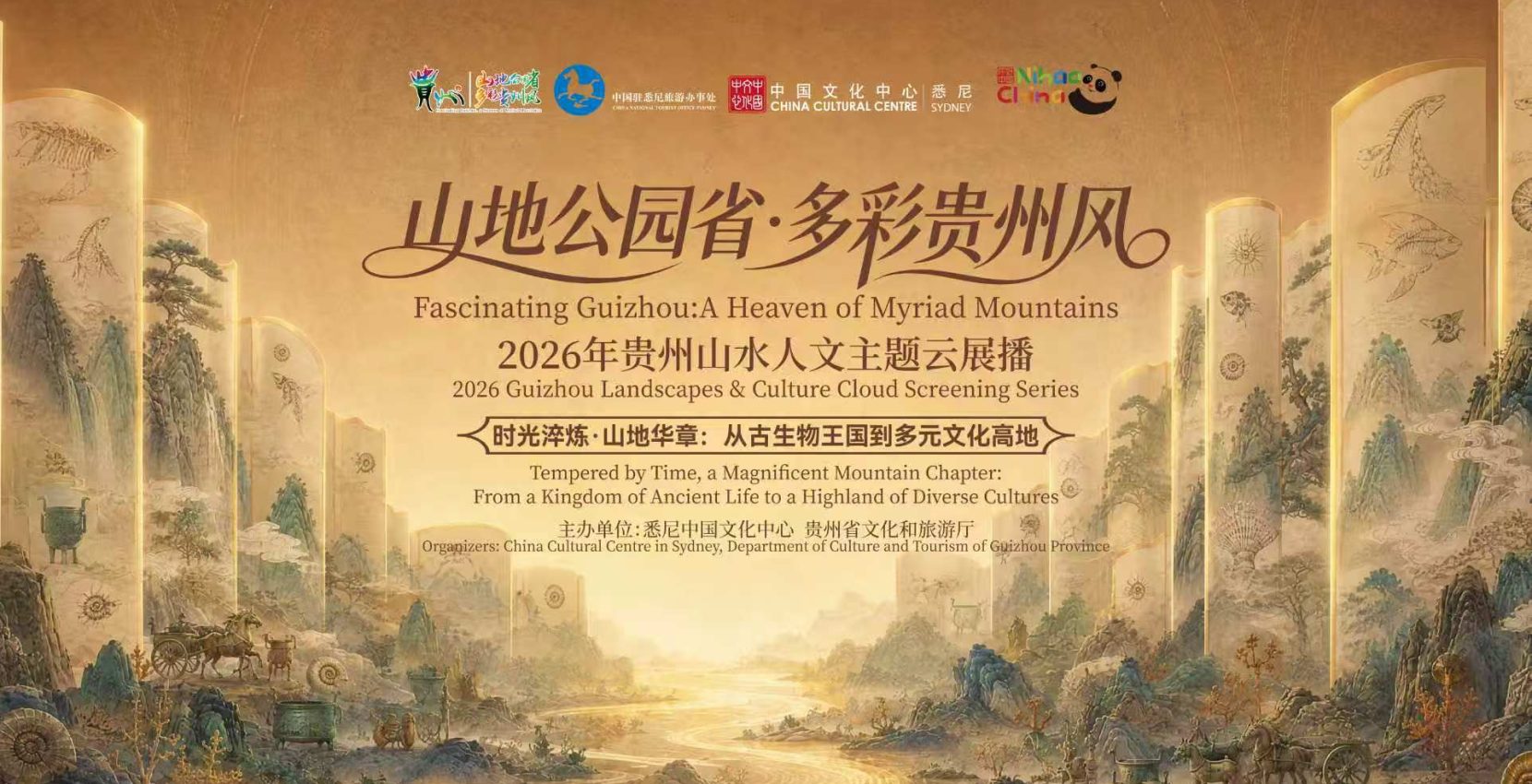
In Guizhou, plateaus and mountains stretch across the landscape, with the Yangtze River and the Pearl River flanking its north and south. Across its 176,000 square kilometers of land, undulating plateaus and mountains interweave with gorges and karst caves. Here lies one of the world’s most typical and diverse regions of karst landform development, earning it the reputation of a “Mountain Park Province”. About 240 million years ago, this area was a vast Palaeo-Tethys Ocean—where countless ancient organisms thrived and multiplied, before sinking into rock strata over vast geological shifts, turning into pages written in stone.
Xingyi · Keichousaurus hui
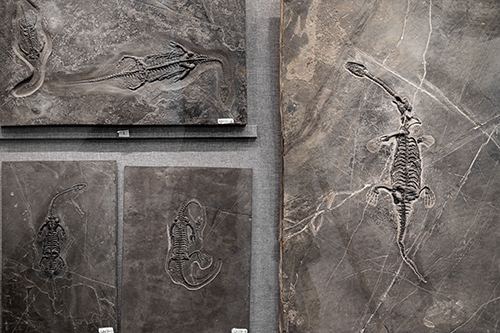
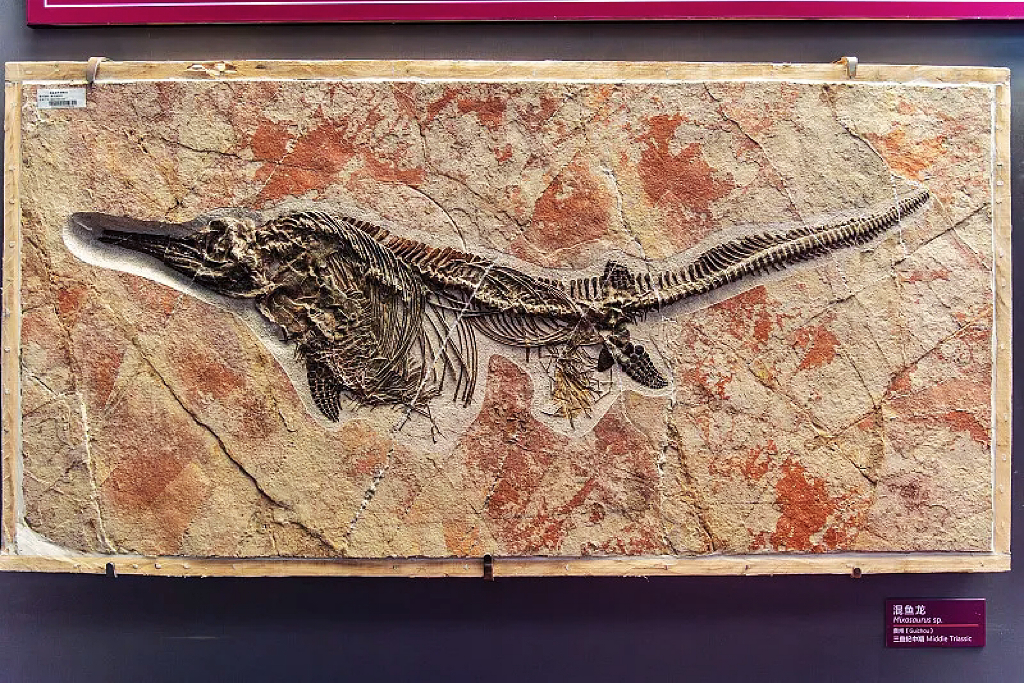
In 1957, while conducting an investigation in Lvyin Village, Xingyi, Guizhou, Mr. Hu Chengzhi of the Geological Museum of China accidentally discovered an animal skeletal fossil on a stone slab belonging to a local household. Later, identified and studied by Mr. Yang Zhongjian (C. C. Young), the founder of Chinese vertebrate paleontology, it was confirmed to belong to a new genus and species of the order Sauropterygia. Because it was discovered in Guizhou and first collected by Mr. Hu Chengzhi, it was named Keichousaurus hui. This is the earliest Triassic marine reptile fossil discovered, studied, and named in China, and it also marks the first discovery of primitive sauropterygians in Asia.
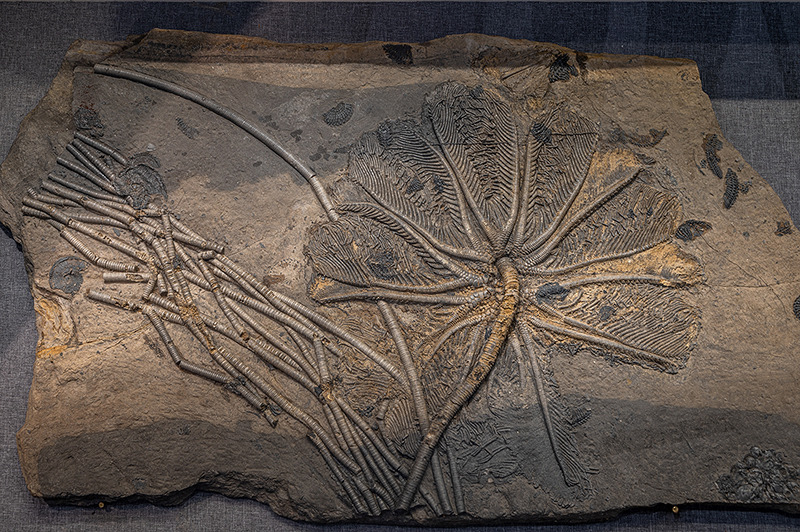
Meanwhile, in Guanling, Guizhou, the “Guanling Biota”, dating back approximately 220 million years, unveils another even more magnificent ancient panorama. Buried here are numerous exquisitely preserved fossils of ichthyosaurs, thalattosaurs, crinoids, and other organisms, alongside various groups of organisms including ammonites, bivalves, and nautiloids. Among these, the 8-meter-long Guanlingsaurus liangae stands out as the “behemoth of the Palaeo-Tethys Ocean”, while the vast quantity and exquisitely formed crinoid fossils are rare among global strata of the same period. The Guanling Biota serves as a “natural laboratory” for researching the recovery and evolution of Triassic marine life and ancient oceanic environments. Precisely because of this, Guizhou is praised by paleontologists as an “irreplaceable paleontological kingdom”.
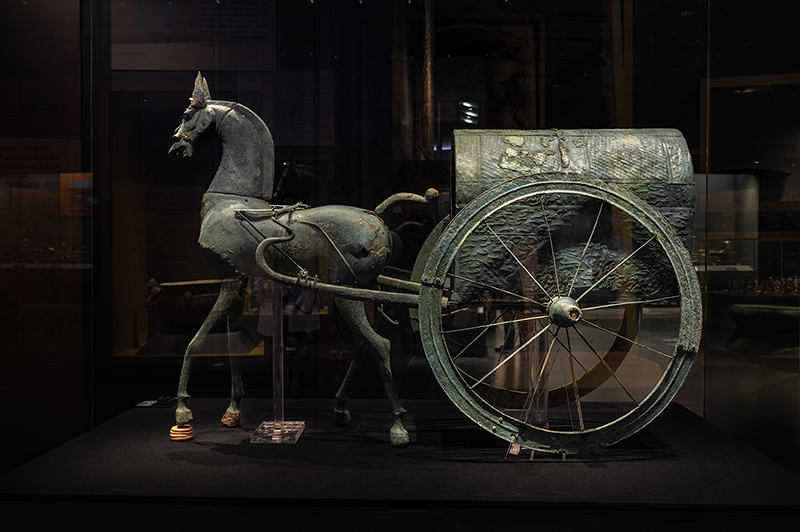
As time flows on, the 240-million-year history of marine life turns its page, and the chapter of human civilization slowly unfolds across the land of Guizhou. Guizhou is one of the important birthplaces of ancient humans and ancient cultures, where early ancestors began to thrive as early as 300,000 years ago. As time passed, accompanied by the formation of settlements and the emergence of cultural centers, the mysterious and unique Yelang Culture was nurtured here. From the Qin and Han Dynasties onward, Guizhou became a venue for practicing the dual administration of commanderies and vassal kingdoms, the Jimi (bridle-and-rein) governance system, and the Tusi (native chieftain) system, whose accumulated experiences coalesced into a powerful force driving the formation and development of a unified multi-ethnic nation. In 1975, the Eastern Han Dynasty bronze chariot and horse unearthed from Han Tomb No. 8 in Wantun, Xingyi, Guizhou—measuring 112 cm in total length and 88 cm in height, comprising over 200 components, and shattered into hundreds of fragments upon excavation—was restored to its former glory only after six months of painstaking work by archaeological experts. It testifies to the cultural exchanges between Guizhou and the Central Plains two thousand years ago, serving as the “Crown of Bronze” signifying Guizhou’s integration into the process of a unified Chinese civilization.
The Thought and Culture of Guizhou
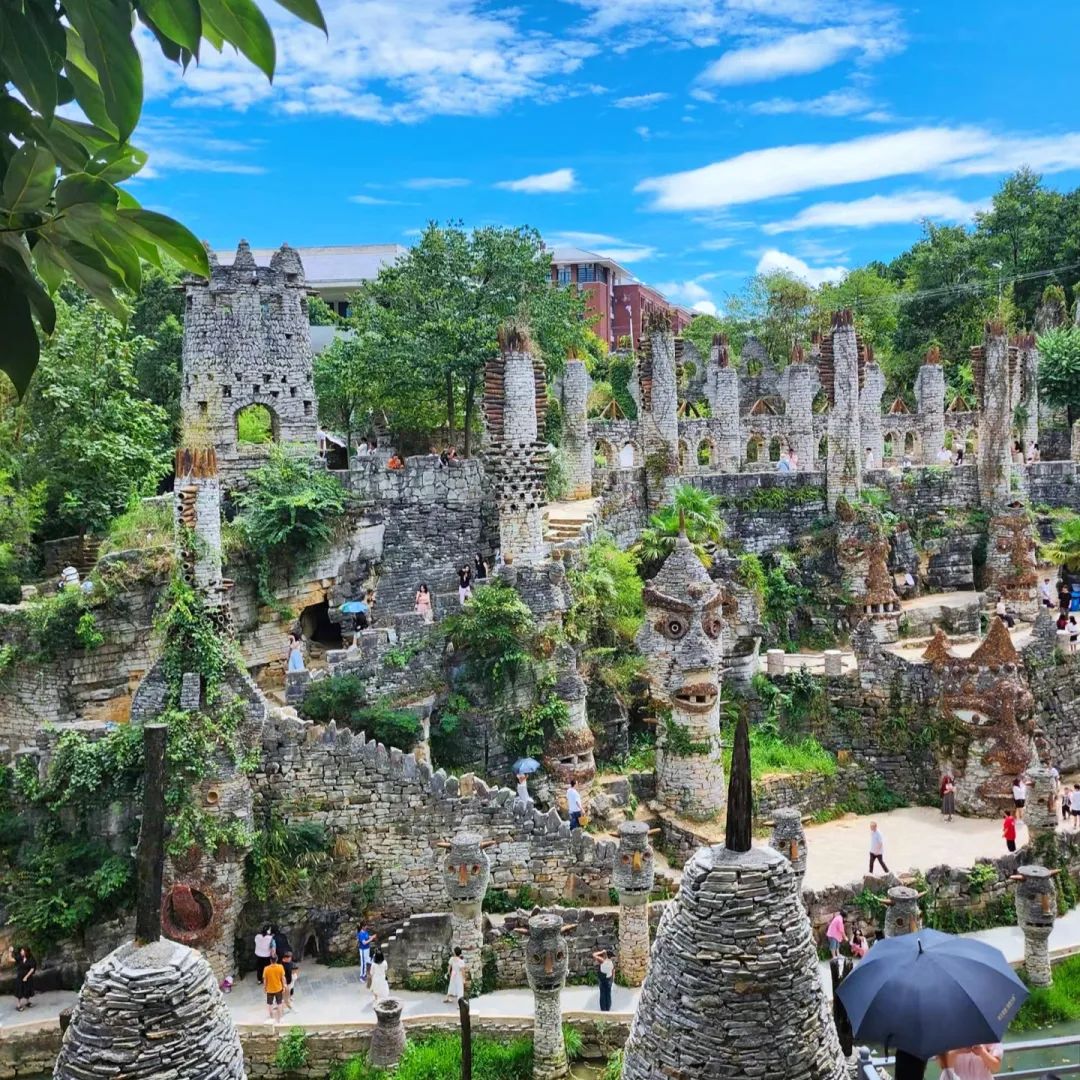
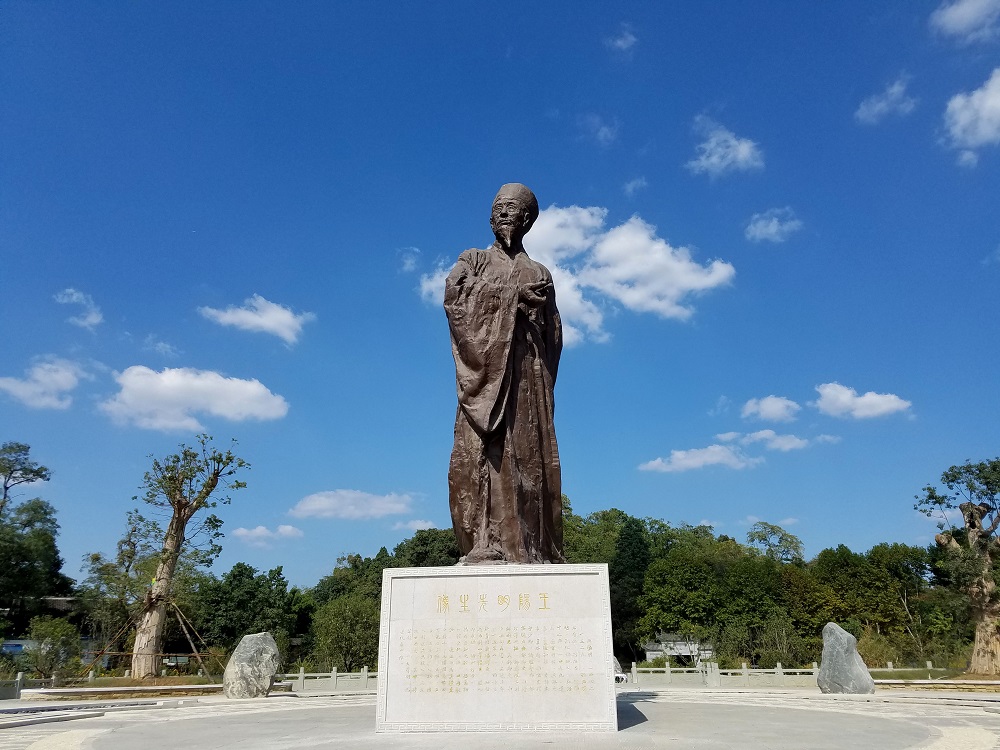
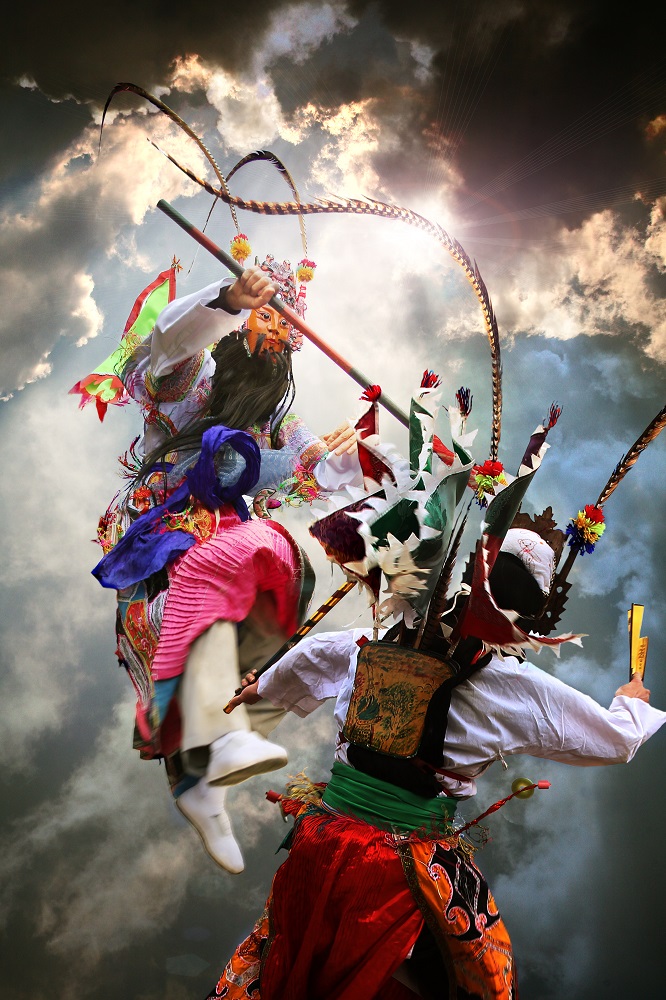
Guizhou is also a highland of thought and culture. The great Ming Dynasty Confucian scholar Wang Yangming attained enlightenment at Longchang in Xiuwen, giving birth to Yangming Mind Philosophy. The “unity of knowledge and action” forms the cultural essence of this landscape, while the spirit of never lagging behind in action runs deep in the blood of its people. Meanwhile, the Tunpu culture, left by the Ming Dynasty policy of “transferring troops from the north to conquer the south”, has frozen the Jiangnan charm from six hundred years ago in central Guizhou, retaining its vibrant vitality to this day. Eighteen long-settled ethnic groups have coexisted here for generations, celebrating their own distinct heritages while honoring those of others in harmony, weaving a colorful tapestry of ethnic unity with their splendid costumes and rich festival traditions.
From the ichthyosaurs of 240 million years ago to the bronze chariot and horse of two thousand years ago, from the birth of Yangming Mind Philosophy to the steadfast preservation of Tunpu culture, Guizhou is a fruit borne of the main vine of Chinese culture, a magnificent mountain chapter tempered by time. We cordially invite you to visit Colorful Guizhou, to turn together the pages of this epic written by time, and to experience the magnificent journey of this land from ancient oceans to human civilization.